Posted by Shawn McCadden on Tue, Sep 07, 2010 @ 12:26 PM
Please read RRPedia Use and Contribution Information before using or contributing to RRPedia
Property Values and Equity Will Drop as a Result of the EPA RRP Rule
Home buyers, investors and realtors will likely drive awareness about lead and the new EPA RRP rule up. But, at the same time, such awareness will drive the values of pre-1978 properties down. If unaware of the additional considerations of risks, liability and costs related to the RRP, realtors will likely walk into a hornet’s nest.
Some home buyers and investors use realtors acting as buyer brokers to assist them when purchasing property. If making buying decisions based on property pricing and the costs related to bringing the properties they purchase up to par with their desires, these buyers will not be happy if they are blindsided by the RRP rule. These buyers will also be very unhappy, and may consider legal options, if they feel their realtor should have advised them about such considerations during the buying process.
A buyer’s willingness to purchase a property that contains lead will definitely be effected as a result of the RRP rule. First, once word gets out, the health risks of lead paint and related liabilities will cause many buyers to bypass any consideration of pre-1978 properties. As the supply goes up, the prices of these properties will go down. Also, investors won’t like the added costs of owning such properties, particularly if the value of those properties is less likely to increase over time as compared to properties without lead. This too will lower property values to a point where the value of certain properties may only be in the land they sit on, less the cost to get rid of the original lead infused structure.
As a result of the RRP rule, I predict home sellers and realtors will get into uncomfortable negotiations with buyers, and as a result, even some challenging conversations between themselves. Let’s just say the asking price for a pre-1978 property is $280.000. I picture scenarios where a buyer will make two different offers for that property. One offer will be close to the buyer’s asking price, say $270.000. But, the offer will be conditional upon testing the home for lead to confirm no lead is present. The second offer will be much lower, say $240.000. The second offer will reflect the additional costs and risks the buyer feels they will be assuming if the home does have lead and or the seller isn’t willing to allow testing for lead. In the negotiations, realtors will likely become the punching bag, as buyers and sellers typically never interact, but rather the realtor acts as the middleman. If the seller is first finding out about lead and the RRP as a result of the offer, as mentioned above, that seller might not be happy with their realtor either.
As a side note, realtors as a whole are typically much more professional and proactive than contractors. The majority of them are also dues paying members of one single, well funded and very powerful trade association that represents their interests. I predict that once a good number of realtors catch wind of and understand how the RRP will affect their industry; their association will be working to modify the rule in their favor. This might be of benefit to renovators, but just as easily, it might not.
Posted by Shawn McCadden on Fri, Sep 03, 2010 @ 12:50 PM
Please read RRPedia Use and Contribution Information before using or contributing to RRPedia
Renovators And Their Trade Partners Will Need To Work Out And Agree On Who Will Do What
Many contractors seeking to comply with the new EPA RRP rule are reporting concerns and challenges about finding trade partners who are willing to operate in compliance. Many renovators have told me that their trade partners have flat out refused to get their businesses and workers certified. Others have said their trade partners have committed to do so but have been slow to get it done due to the related costs. This has become quite an opportunity for some trade partners who have become certified and are marketing their certifications and services to general contractors. Several are actually offering to sub-contract the set-up, containment, demo, clean-up, cleaning verification and all related and required documentation for general contractors.
A surprise to me, but also a no-brainer, was one electrician’s comment that he was having problems finding general contractors to work for who were in RRP compliance. Just as general contractors need to find new compliant trade partners to work for them, many trade partners are finding they can no longer rely on the volume of work they got in the past from contractors if those businesses choose to operate illegally.
Liability risks may also drive compliance. Renovators and their trade partners will need to work out and agree on who will do what. Here are a few examples:
-
Who will take care of the notification requirements and documentation of same before the job begins? Under the rule, either can do so, but the business under contract with the property owner must maintain the required documentation.
-
If a trade partner or his employees are not certified renovators, will the renovator take on the responsibility of training and supervising the trade partner and or his employees? If so, at what level of risk? And, will either business’s insurance company allow such a relationship in the future?
-
Who will create the required renovation checklist?
-
Who will make sure the homeowner and or tenant receives a copy of the required renovation checklist after completion of the work?
-
In Massachusetts, who will maintain the required log documenting who comes in and out of the containment area during the course of renovations?
The first time a RRP fine is accessed for a violation the finger pointing will start, causing one or both businesses to get serious about certification and compliance. The first time a renovator is sued by a client or neighbor as a result of the actions of a trade partner, the tactics used by the lawyers will cause both businesses to have a new and different outlook on RRP compliance, insurance coverage amounts and indemnification clauses. Attorney Mike Sams of Kenney & Sams, P.C., told me that failure of a business to be properly certified under the RRP rule on its own is evidence of negligence should a homeowner or insurance company take the contractor or trade partner to court. Taking this a little further, a contractor hiring a non-certified trade partner might also be considered negligence if that trade partner is allowed to work unsupervised.
To confuse matters even further, under their definition of the difference between an employee and an independent contractor, the IRS says that a contractor cannot supervise the work or workers of a sub contractor. Doing so might result in the IRS labeling the sub contractor as an employee. If this were to happen it could trigger addition payroll taxes and workers compensation costs for the general contractor.
Posted by Shawn McCadden on Thu, Sep 02, 2010 @ 04:54 PM
Please read RRPedia Use and Contribution Information before using or contributing to RRPedia
EPA Releases Penalty Guidelines for RRP Enforcement

The EPA recently released a new government document, titled the Consolidated Enforcement Response and Penalty Policy (ERPP), laying out enforcement and penalty guidelines for the Renovation, Repair and Painting (RRP) rule. The guidelines were announced in a memorandum from Rosemarie A. Kelly, Director of the U.S. EPA Waste and Chemical Enforcement Division, on Office of Enforcement and Compliance Assurance letterhead. The memorandum was dated August 19, 2010. The new policy was created because even though the RRP ruling was issued in April 2010, enforcement and penalty issues were not clearly defined and articulated in the ruling then.
In the memorandum, Rosemarie A. Kelly states:
"This Policy sets forth guidance for Agency officials to use in determining the appropriate enforcement response and penalty amounts for violations of Section 409 of TSCA resulting from failure or refusal to comply with provisions of the Pre-Renovation Education Rule (PRE Rule); Renovation, Repair and Painting Rule (RRP Rule); and Lead-Based Paint Activates, Certification and Training Rule (LBP Activities Rule). "
I suggest you check out the introduction section in the policy document. Although the policy document is intended to provide guidelines for EPA Enforcement staff, the document introduction also states:
"Enforcement staff should continue to make appropriate case-by-case enforcement judgments, guided by, but not restricted or limited to, the policies contained in this document”
View or download the August 19, 2010 memorandum
View or download the the enforcement guidelines document (ERPP).
View or download the Final RRP Rule with Preamble
View or download the amendment regarding the Opt-Out and Record Keeping Provisions
View or download the June 18, 2010 memo delaying enforcement of certain certification requirements
Posted by Shawn McCadden on Thu, Sep 02, 2010 @ 12:26 PM
Please read RRPedia Use and Contribution Information before using or contributing to RRPedia
Insurance Companies Will Be Rethinking Coverage and Premiums Due to EPA RRP Rule
Many liability insurance policies do not cover lead poisoning or contamination. Renovators should be sure they are working with an agent who is up on the EPA RRP rule and should sit down with their agent to review their coverage needs and options. Tom Messier, with Mason and Mason Insurance, tells me that insurance companies are starting to become aware of the RRP rule. Insurance is all about risk. The greater the risk, the higher the cost of insurance will be.
Increased risk of liability due to lead awareness as well as the government mandated certification requirements are likely to affect a renovator’s ability to get a policy as well as the premium charged by carriers who offer coverage. Tom told me he predicts that existing policies will not be renewed unless a renovator can show they are certified firms and use certified renovators to oversee the work their company performs. He also predicts insurance carriers will start requiring the insured’s proof of compliance with the rule as well as proof of compliance and insurance coverage for the trade partners the insured renovator works with. Tom stressed that this would be for both liability as well as workers compensation insurance coverages. He said that even if they are self-employed, insurance carriers will likely require all trade partners have their own workers compensation policies as a way to prevent injured or poisoned trade partners from claiming against the general contractor’s policy.
Also Tom warns, just as many insurance companies now review the contracts contractors use with customers and trade partners before offering or renewing a policy, Tom predicts carriers will be asking to see completed copies of the required RRP documentation used by contractors. I asked Tom what renovators should do to protect themselves and be sure they can maintain coverage going forward. Tom’s response; “Document, document, document!!!”
One other area that will likely be of concern is lead coverage in policies for landlords who own pre-1978 properties. Here too, compliance with RRP rules and documentation of work practices used for renovations and repairs will likely become required conditions of obtaining and keeping coverage. The EPA RRP rule may also cause an increase in insurance coverage on properties built prior to 1978, for landlords and maybe even home owners.
Posted by Shawn McCadden on Wed, Sep 01, 2010 @ 12:17 PM
Please read RRPedia Use and Contribution Information before using or contributing to RRPedia
Uninformed and Nervous Neighbors Will Keep RRP Renovators On Their Toes
Awareness about lead and the potential effects of lead poisoning may not yet be prevalent with the public, but it will quickly increase. Renovators need to deal with this reality in a proactive way. Training and firm certification are great first steps. But, renovators will need to do much more to protect their businesses from potential challenges and liabilities triggered by an uniformed public.

First, the EPA’s public awareness campaign has already begun. The campaign warns people of the dangers of lead, but does little to make them aware of the RRP rule, the need to work with renovators who are certified in lead-safe work practices, and or how to find a certified firm to oversee work on the homes they live in. So, in effect, the campaign warns the public but leaves them basically ignorant of their options. (Click on the sample ad to the left to view in full size)
Second, the warning signs and barriers required to be put in place around exterior and common area containment areas will have a similar effect of raising concern. Unless properly educated about their options and about lead-safe work practices, neighbors and the parents of children attending child occupied facilities will again suffer from ignorance about lead. Many will likely react out of fear. This fear may potentially result in reporting a renovator and causing an inspection, even if the renovation work is being done within compliance.
Remember, as a business you are guilty until you prove yourself innocent at your own expense. An OSHA and or RRP inspector will likely be able to find at least one violation of some rule if they show up at one of your jobsites. Some inspectors may even feel it is their obligation to find a violation. The cost to defend yourself might be as high as the cost of any fines, so even if you win you lose. In Massachusetts, the Department of Occupational Safety (DOS) is already collaborating with OSHA regarding what to do if either finds a violation that should be referred to the other. Oh, and don’t forget those neighbors who have a bone to pick with your customer, have nothing else to do all day, and or are just plain paranoid.
Posted by Shawn McCadden on Tue, Aug 31, 2010 @ 08:00 AM
Please read RRPedia Use and Contribution Information before using or contributing to RRPedia
Compliance With and Enforcement of the RRP Rule Will Be Assisted By OSHA Inspectors
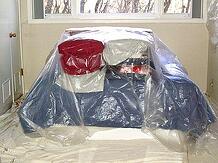
In addition to the OSHA rules contractors should already have been aware of related to worker safety, the EPA RRP rule has added yet additional OSHA concerns for renovators. One for example is working on a surface covered with plastic. OSHA considerations related to working on plastic are not part of the curriculum delivered during the required EPA certified renovator training. Due to the absence of this information, the EPA is essentially leaving it up to renovators to become aware of such considerations on their own. Once aware, renovators must seek out the information they need and adjust their work practices accordingly to avoid fines from OSHA should they get randomly inspected. Or worse, have a worker accident.
This begs a few questions. First, were the authors ignorant of such considerations? Asked another way, does the left hand know what the right hand is doing? Is this another example of a breakdown in communication between very significant departments of our government charged to look out for our best interests? A second question might be; did the authors of the EPA RRP rule leave this information out of the rule for a strategic purpose? Perhaps this is just one more way to force small independent businesses out of the construction industry in favor or labor unions.
In one of his recent blogs, RRP certification training provider and business coach, Mark Paskell of The Contractor Coaching Partnership, shares a real life story about a contractor who was visited, at the same time, by both an OSHA inspector as well as an inspector from the Massachusetts Department of Occupational Safety (DOS). (Massachusetts has assumed administration and enforcement of the RRP rule from EOPA) In the blog Mark describes the battle that took place between the OSHA inspector and the DOS inspector about the use of plastic on the jobsite. Check out the blog to see which inspector retreated.
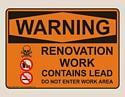
Of bigger concern should be the distribution of misinformation at the certified renovator training. For example, using the sample signage included in the EPA approved training manual (required to be posted outside contained work areas), might just get you in trouble with OSHA. First off the RRP rule requires the use of a “warning” sign, but the sample sign is a “caution” sign. OSHA considers a warning sign to be a stronger message than a caution sign, and has rules dictating when and how to choose one versus the other.
Also, if you have employees, the sample sign in the manual will not meet OSHA requirements either. Employees must be told what they are being warned about on such signs, in this case lead, and the signs must also instruct the employees not to smoke, eat, or drink in a work area assumed to contain lead. Check out this article by Dick Hughes of Excellence in Safety for a list of other OSHA requirements left out of the RRP rule.
The RRP is challenging enough to comply with. Contractors putting their heads in the sand about OSHA requirements and compliance are taking a huge risk. I am planning on taking some OSHA training classes to learn more about what contractors must need to be aware of and what they will need to do to avoid risking violations and fines. I will post information about this subject to RRPedia in the future. If you have not done so already, you can subscribe to RRPedia at the top of this page. Subscribers will be notified by e-mail as soon as new articles are posted.
If you are looking for forms and signage to help you with comply with the EPA RRP rule, I recommend you check out what The Lead Paint Forms Store has to offer.
Posted by Shawn McCadden on Fri, Aug 27, 2010 @ 08:32 AM
Please read RRPedia Use and Contribution Information before using or contributing to RRPedia
What is Required To Become A Licensed Lead Inspector?
Many remodelers have shared with me that they have been entertaining the idea of become licensed lead inspectors. Recognizing the new EPA RRP rule as here to stay, many see doing inspections as an opportunity to diversify their business's offerings and at the same time add some much needed revenue due to our current economic challenges.
I asked John MacIsaac of ASAP Environmental, a lead testing expert and recognized leader in his industry, to write an article for RRPedia. The article below was written by John to help contractors understand what is involved if they would like to consider become inspectors. John pointed out to me that licensing requirements definitely vary from state to state. John's article is specific to Massachusetts requirements, but should help provide a general understanding of what to expect if you seek to be licensed in other states.
The Article:
The first step in being licensed as a lead inspector in Massachusetts is to attend a six-day, 48-hour CLPPP approved training course. The course costs $1675 at The Institute of Environmental Education (IEE). The training course teaches how to perform lead inspections and risk assessments in residential property in Massachusetts. Topics include background information on lead, sources of lead exposure, health effects for adults and children, regulatory information, testing equipment, and procedures for performing lead inspections, risk assessments, re-inspections and post compliance inspections. Once the course is completed you have to take an exam given by the Massachusetts Department of Public Health. You will need an 80% or better in order to pass the test. There is no charge to take this test.
Upon successful completion of the examination and a lead physical and blood test, you need to complete an apprenticeship program with a licensed Master Lead Inspector. It costs between $3,000 and $5,000 to do an apprenticeship. You must work with the Master Lead Inspector for a total of 80 hours and you must accompany the Master inspector on 15 inspections. The 15 inspections will consist of 7 Initial Inspections (5 using the XRF gun and 2 using sodium sulfide), 6 re-occupancy reinspections or final deleading reinspections, and 2 PCADs (post compliance assessment determinations).
Once the apprenticeship is completed the paperwork is sent to the Childhood Lead Poising Prevention Program (CLPPP) and they will issue you a lead inspector’s license for Massachusetts. This license will allow you to do Initial Lead Inspections, Reinspections, and Lead Determinations. It will also allow you to issue Letters of Reoccupancy and Letters of Compliance. The license will only be valid in Massachusetts. There is no reciprocity with your licenses, in other words you will not be able to use the license in any other state for inspections. All other states in New England have their own licensing process that would need to be followed to inspect in that state.
After having preformed 75 Inspections or Reinspections you can apply for a risk assessors licenses in MA. As a Risk assessor you can do risk assessments for interim control.
CLPPP offers refresher courses that will need to be taken periodically to maintain your license. They are a 1 day course with a test at the end of the day that you must pass in order to maintain your license
You must renew your license once a year. For Lead Inspectors/Risk Assessors the renewal fee is $325. For Master Lead Inspectors the fee is $425.
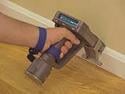
Brand new XRF Machines go for anywhere from $15,000 to upwards of $30,000. You may be able to purchase one used from the manufacturer or online. It can cost upwards of $5,000 a year to maintain them.
If you are a Certified State Licensed Renovator as well as a Certified Lead Inspector, Massachusetts will not allow you to do Comprehensive Initial Inspections, Risk Assessments, or Lead Determinations on your own property or a property you are working on (RRP) because of a potential conflict of interest. You will be required to have it tested by another Massachusetts licensed inspector.
For information you can go to the following:
Childhood Lead Poison Prevention Program (CLPPP)
Massachusetts Childhood Lead Poisoning Prevention Program’s database for lead inspected homes.
MA Department of Occupational Safety (DOS)
EPA
Institute for Environmental Education (IEE)
RMD Instruments
Thermo Scientific
Note: This information was provided by John MacIsaac of ASAP Environmental, Inc.
Posted by Shawn McCadden on Thu, Aug 26, 2010 @ 04:37 PM
Please read RRPedia Use and Contribution Information before using or contributing to RRPedia
The RRP Renovation Checklist Must Be Given to Certain Parties At The Completion Of Renovations
Because of one of the EPA RRP amendments, there is a new requirement regarding documentation. As of the amendment that took effect on July 6th, 2010, when the final invoice for the renovation is delivered, or within 30 days of the completion of the renovation, whichever is earlier, the renovation firm must provide information demonstrating compliance with the training and work practice requirements of the RRP rule to the owner of the building being renovated and, if different, to the occupants of the renovated housing or the operator of the child-occupied facility.
- For renovations in common areas of target housing, the renovation firm must provide the occupants of the affected housing units instructions on how to review or obtain this information from the renovation firm at no charge to the occupant. These instructions must be included in the notice provided to each affected unit or on signs posted in common areas. Similar requirements apply for renovations in child-occupied facilities.
- The renovation firm is also required to provide interested parents or guardians of children using the child-occupied facility instructions on how to review or obtain a copy of these records at no cost to the parents or guardians. This could be accomplished by mailing or hand delivering these instructions, or by including them on the signs posted.
- Renovation firms must provide training and work practice information to owners and occupants. The information should be provided in a short, easily read checklist or other form. EPA's "Sample Renovation Recordkeeping Checklist'' may be used for this purpose, but firms may develop their own forms or checklists so long as they include all of the required information.

-
The specific information that is required to be provided are training and work practice compliance information, as well as identifying information on the manufacturer and model of the test kits used, if any, a description of the components that were tested including their locations, and the test kit results.
- The checklist or form must include documentation that a certified renovator was assigned to the project, that the certified renovator provided on-the-job training for workers used on the project, that the certified renovator performed or directed workers who performed the tasks required by the RRP rule, and that the certified renovator performed the post-renovation cleaning verification.
- This documentation must include a certification by the certified renovator that the work practices were followed, with narration as applicable.
- EPA is not requiring that the renovation firm automatically provide a copy of the certified renovator's training certificate, which must be maintained in the firm's records as an attachment to the checklist or other form.
If you are looking for forms and signage to help you with comply with the EPA RRP rule, I recommend you check out what The Lead Paint Forms Store has to offer.
Posted by Shawn McCadden on Tue, Aug 24, 2010 @ 02:17 PM
Please read RRPedia Use and Contribution Information before using or contributing to RRPedia
Comparison of EPA and DOS RRP Rule Requirements
The MA Division of Occupational Safety has released a very helpful comparison of the new MA RRP rule with the existing EPA RRP Rule. This comparison should help those doing RRP renovations under the recently enacted MA RRP Rule understand any difference between the two rules.
The following information is directly from the DOS web Site:
I. Applicability of Requirements
EPA: The EPA RRP Rule applies to renovation, repair and painting (RRP) work conducted for a fee in pre-1978 target housing and child-occupied facilities where the work involves the disturbance of more than 6 ft2 of painted surfaces per room or more than 20 ft2 of paint on exteriors (total), except that the quantity exemptions do not apply to any projects involving window replacement or demolition of structures.
DOS: Same as EPA.
II. Firms or Entities Requiring Licensure
EPA: All firms or other entities performing work subject to the Rule require certification as “Certified Firms.”
DOS: Firms or other entities performing work require licensure as “Lead-Safe Renovation Contractors,” except that the following entities may apply to DOS for a “Contractor License Waiver”:
1. Entities that perform regulated work in facilities that they own, using their own employees.
2. Entities that were certified by EPA (or a state delegated by EPA to administer EPA RRP Rule) prior to July 9, 2010.
DOS also allows Deleading Contractors licensed by 454 CMR 22.00 to perform regulated renovation work without being separately licensed as “Lead-Safe Renovation Contractors.” Entities applying for a “Contractor License Waiver” do not have to pay a fee for the waiver but must subsequently comply with all other provisions of 454 CMR 22.00, including the requirement to have the work supervised by a “Lead-Safe Renovator-Supervisor”, compliance with work practices (including cleanup), notifications, cleaning verification and recordkeeping.
III. Contractor Licensing Fee and Required Documentation
EPA: $300 for five years. Applicants must submit identifying information, list of professional certifications related to lead-based paint activity and list of previous violations related to lead-based paint activity.
DOS: $375 for five years. In addition to filling out identifying information on application form, applicant must:
1. Document that a person in a supervisory or management capacity has received the one-day Lead-Safe Renovator-Supervisor (“Certified Renovator”) training.
2. Document that a medical monitoring/respirator protection program is in place (entities with employees only). Program templates are on DOS’s website.
3. Submit information related to organization of the business or entity – corporate articles of organization, business certificate, etc., as applicable.
4. Submit lists of current and previous employees.
5. Document workers compensation coverage (entities with employees).
6. Affirm compliance with Massachusetts tax laws, including DOR, DUA, FSC.
7. Submit lists of occupational health and safety-related violations, notices of noncompliance, enforcement actions, etc.
IV. On-site Supervisor Requirement
EPA: EPA requires the supervisor (“Certified Renovator”) to be on site only during certain phases of the work (posting of Warning Signs, establishment of work area containments, during final cleanup and cleaning verification) and available by phone the rest of the time.
DOS: DOS requires the supervisor (“Lead-Safe Renovator Supervisor”) to be on site at all times when RRP work is in progress.
V. Training and Certification Requirement for Supervisor
EPA: EPA requires a one-day “Certified Renovator” course given by an EPA-certified training provider. Possession of the training certificate, which includes a digital image of the trainee, constitutes the certification – persons who possess this certificate do not have to apply to EPA directly. The one-day training course does not include respirator/personal protection training elements. The training/certification is good for five years, after which time the “Certified Renovator must take a one-half day refresher course. EPA allows persons who have taken the deleader-supervisor and deleader-worker courses to take a one-half day upgrade/refresher course to upgrade to “Certified Renovator” status.
DOS: DOS requires essentially the same one-day training course for certified “Lead-Safe Renovator-Supervisors” that EPA requires for “Certified Renovators” except that the DOS-required course includes respirator/personal protection training elements. Where the training is given in Massachusetts, the course must be given by a Massachusetts-licensed training provider. As is the case with EPA, possession of the training certificate, which includes a digital image of the trainee constitutes the certification – persons who possess this certificate do not have to apply to DOS directly. The training/certification is valid for five years, after which time the “Lead-Safe Renovator-Supervisor” must take a one-half day refresher course. DOS also allows persons who have taken the deleader-supervisor and deleader-worker courses to take a one-half day upgrade/refresher course to upgrade to “Lead-Safe Renovator-Supervisor” status. DOS also requires training providers to include “Lead-Safe Renovator-Supervisor” training elements in four-day training courses required for “Deleader-Supervisors” given after July 9, 2010, and DOS will therefore allow “Deleader-Supervisors” to function as “Lead-Safe Renovator-Supervisors” on renovation worksites after they have completed this training.
VI. Certification and Licensing Reciprocity between EPA and DOS
EPA: Firms or entities that have been licensed as “Lead-Safe Renovation Contractors” by DOS in Massachusetts must become certified with EPA as “Certified Firms” in order to carry out RRP work in states where EPA is running the RRP program. EPA allows individuals who have been trained/certified as “Lead-Safe Renovator-Supervisors” in Massachusetts to act as supervisors and perform the functions of “Certified Renovators” on RRP projects in other states where EPA is running the program without needing to obtain separate EPA certification as “Certified Renovators.”
DOS: DOS allows firms that were certified with EPA as “Certified Firms” prior to July 9, 2010 to perform RRP work in Massachusetts without becoming licensed by DOS as a “Lead-Safe Renovation Contractor,” provided that they have received a “Contractor Licensing Waiver” from DOS – there is no fee for this waiver. The “Contractor Licensing Waiver” application is on the DOS website. Contractors that apply for EPA certification after July 9, 2010 are required to pay the licensing fee and become licensed as “Lead-Safe Renovation Contractors” with DOS. DOS will allow “Certified Renovators” that have received training from EPA-approved training providers to perform the functions of “Lead-Safe Renovator-Supervisors in Massachusetts without further training or licensure.
VII. License/Certification Fees for Providers of RRP Training
EPA: EPA issues a four-year certification to lead training providers. Certification fees, which are assessed on a per-course basis, range between $400 and $870 per course. The charge for certification to give to the initial “Certified Renovator” training course is $560, and the charge to give the refresher course is $400. The charge for renewing the certification in either discipline is $340. The training provider certification fee is waived for providers who are state and local governments, federally recognized Indian Tribes and non-profit organizations.
DOS: DOS issues a one-year license to lead training providers and charges a flat licensing fee of $1775, regardless of the number of lead training course disciplines in which the trainer is seeking approval to provide training. DOS has the same licensing fee waiver as EPA for training providers who offer only RRP training and are state and local governments, federally recognized Indian Tribes and non-profit organizations.
VIII. Work Practice Requirements
EPA: The set of work practice requirements specified by EPA’s RRP Rule is a somewhat relaxed version of the work practices currently required for deleading projects. As opposed to what is required for deleading projects, units undergoing renovation are not required to be unoccupied while the work is in progress; it is only required that persons be excluded from the work area, which must be isolated from the rest of the dwelling or child-occupied facility by appropriate means. Plastic sheeting, which must be disposed after each use, must be used to cover floors and other surfaces on building interiors and plants and ground on exteriors. EPA specifies the use of a “cleaning verification” procedure, which is carried out by the on-site ”Certified Renovator” to determine if interior work areas have been adequately decontaminated. Under this procedure, the color of a wiping cloth, that is used to wipe down the work area following the final cleaning, is compared to the color of a standard “cleaning verification card” issued by EPA. If the color of the wiping cloth is the same shade as (or lighter than) the cleaning verification card, the area “passes.” Dust-wipe clearance, as is used to clear deleading projects, may also be used to “clear” RRP projects.
DOS: DOS’ work practice requirements for RRP work are almost identical to those required by EPA, except that DOS allows the use of tarpaulins to cover plants and ground on exterior projects, provided that the tarpaulins are thoroughly decontaminated after each use and not subsequently used for any interior work in target housing and child-occupied facilities.
Click here to find this information at the DOS web site
Posted by Shawn McCadden on Tue, Aug 24, 2010 @ 07:22 AM
Please read RRPedia Use and Contribution Information before using or contributing to RRPedia
What Is The Lead Disclosure Rule?
Renovators doing RRP work will be involved with lead testing. Lead testing for RRP related projects can be done by the certified renovator, a certified lead inspector or certified lead risk assessor. The type of testing that can be done by each varies, but regardless of who does the testing written reports are required and, by law, certain individuals must be given a copy of those reports if lead is found. The EPA RRP rule is specific about who must receive test reports if the testing is done for the purposes of an RRP renovation.
Regardless of the original purpose of testing (RRP or any other purpose), once a reports exists, the Lead Disclosure Rule below dictates who must receive the reports and when in regards to the selling or leasing of a property. The rule also specifies what documentation must be created and maintained to prove the reports were distributed to the required parties. Because of the considerations of the Lead Disclosure Rule, I recommend renovators get the property owner's written permission prior to conducting any lead testing.
The following information is from the HUD web site:
Congress passed the Residential Lead-Based Paint Hazard Reduction Act of 1992, also known as Title X, to protect families from exposure to lead from paint, dust, and soil. Section 1018 of this law directed HUD and EPA to require the disclosure of known information on lead-based paint and lead-based paint hazards before the sale or lease of most housing built before 1978.
What is Required?
Before ratification of a contract for housing sale or lease, sellers and landlords must:
Give an EPA-approved information pamphlet on identifying and controlling lead-based paint hazards ("Protect Your Family From Lead In Your Home" pamphlet, currently available in English, Spanish, Vietnamese, Russian, Arabic and Somali).
- Disclose any known information concerning lead-based paint or lead-based paint hazards. The seller or landlord must also disclose information such as the location of the lead-based paint and/or lead-based paint hazards, and the condition of the painted surfaces.
- Provide any records and reports on lead-based paint and/or lead-based paint hazards which are available to the seller or landlord (for multi-unit buildings, this requirement includes records and reports concerning common areas and other units, when such information was obtained as a result of a building-wide evaluation).
- Include an attachment to the contract or lease(or language inserted in the lease itself) which includes a Lead Warning Statement and confirms that the seller or landlord has complied with all notification requirements. This attachment is to be provided in the same language used in the rest of the contract. Sellers or landlords, and agents, as well as homebuyers or tenants, must sign and date the attachment.
- Sellers must provide homebuyers a 10-day period to conduct a paint inspection or risk assessment for lead-based paint or lead-based paint hazards. Parties may mutually agree, in writing, to lengthen or shorten the time period for inspection. Homebuyers may waive this inspection opportunity.
Types of Housing Covered?
Most private housing, public housing, Federally owned housing, and housing receiving Federal assistance are affected by this rule.
Effective Dates:
The regulations became effective on September 6, 1996 for transactions involving owners of more than 4 residential dwellings and on December 6, 1996 for transactions involving owners of 1 to 4 residential dwellings.
Recordkeeping:
Sellers and lessors must retain a copy of the disclosures for no less than three years from the date of sale or the date the leasing period begins.
What Can You Do?
If you did not receive the Disclosure of Information on Lead-Based Paint and/or Lead-Based Paint Hazards form when you bought or leased pre-1978 housing, contact 1-800-424-LEAD (5323).
According to the HUD web site, this content was current as of March 4, 2008. Click here to view this information on the HUD website