Protected by Copyscape Duplicate Content Check

Subscribe by Email and get notified about new postings as soon as they happen!

Your email:

Check Out This DVD About RRP Work Practices

This DVD, produced by Chris Zorzy, contains great time saving solutions for complying with the RRP Rule.   Chris shares a variety of containment strategies that will help keep your jobsites clean, reduce job costs and meet RRP requirements

Looking For RRP Forms and Signage?

Shawn has reviewed these forms, helped the provider enhance the forms and recommends them as a great option for those who want to use paper forms to document compliance with the EPA RRP rule.

Lead Paint Fors Store Banner

LeadPaint FormsStore.com

Browse Topics by Tag

I just wanted to say thank you for your efforts to keep us informed.

"Thank you again for the hundreth time for keeping a vigil on this business nightmare. Your site is one of the best resources we have to stay on level ground" 

Christian Peter


"I am quite impressed with all the confusion out there at Shawn McCadden’s clear and concise voice that continues to help contractors and those involved in this industry truly understand the rule. His efforts should be applauded." 

Christopher Wagner, LBPFiles


"RRPedia is an accurate and contractor friendly interpretation of the very complex and confusing EPA RRP rule"


"Thanks for taking the time to write the blog.  It's about the only place one can go to get some serious info on this dreadful subject"

Suggest or Contribute a RRPedia Topic

Want a Simple Summary of the EPA RRP?

Shawn McCadden has created an EPA RRP Summary for Remodelers.

"Hi Shawn, Nice RRP write up on the website.   I've already forwarded a link to it to a number of local builder types."  

Click here to go to the summary.  You can also download it if you want your own copy.

Add this widget to your Web page, blog, or social networking site. A widget is a CDC.gov application that displays the featured content directly on your web page. Click the buttons to see the next tip to prevent lead poisoning.


Welcome to RRPedia
Your Interactive Resource for EPA RRP Information

Looking for accurate information about the EPA RRP rule?

RRPedia RRPedia logohas been created by Shawn McCadden to help remodelers and others affected by the New EPA Renovation Repair and Painting Rule. 

Please read RRPedia Use and Contribution Information before using or contributing to RRPedia

Be sure to Read Shawn's Remodeling Magazine Blogs about the EPA RRP Rule.  Click here to see a list

Keep checking back.  Information about a wide range of RRP-related topics will continue to be added. 


You Can Browse For RRP Topics By Using The Tags List To The Right

Current Articles | RSS Feed RSS Feed

Choosing Between EPA Approved Lead Test Kits


Please read RRPedia Use and Contribution Information before using or contributing to RRPedia

Choosing Between EPA Approved Lead Test Kits

Now that they have more than one option, many renovators are now asking how to go about choosing a lead test kit.  Currently there are two commercially available Lead Test Kits approved by EPA for use on RRP regulated renovations. The recognized lead test kits are offered by Hybrivet Systems, Inc. and ESCA Tech, Inc.   

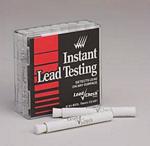
Hybrivet Systems, Inc. manufactures and distributes the Lead Check test kit

Lead Check test kit

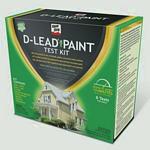
ESCA Tech, Inc. manufactures and distributes the D-Lead Test kit

D-Lead test kit


The D-Lead test kit was only recently recognized for RRP use.  The Lead Check Kit has been recognized since before the RRP rule came into effect on April 22, 2010.

RRP Instructor Shawn McCaddenGiven the choice, as Massachusetts and EPA authorized RRP instructor, I will definitely use the Lead Check Swabs in my training classes.  I offer some reasons for this choice below.  However keep in mind, if you do RRP renovations, you will likely be choosing which test lead test kit to use and why for different reasons than I would as an instructor.   I hope the information below helps you make a good decision when you select a lead test kit.  Please feel free to add any other comparisons or consideration for choosing a lead test kit by commenting at the end of this article.

Comparison of Lead Test Kits

  • In my opinion the Lead Check test kits are simpler to use.  The Lead Check kits give instant results with no waiting, where as the D-Lead Test Kit instructions say the test takes 3-13 minutes. 
  • The Lead Check kits can be used on the surface to tested, but the D-lead kit requires the collection of samples and placement of the samples into test solution bottles. 
  • Lead Check swabs contain everything you need inside the swabs.  You can just squeeze the kits with your fingers as instructed, shake the swab and you are ready to test.  The D-Lead kits require measuring and mixing chemicals to get ready for testing.
  • I believe the Lead Check kits are much safer, as they do not contain any toxic or harmful chemicals.  The D-Lead test kits contain sodium hydroxide and ammonium sulfide, both of which are considered irritants to the skin and eyes and should not be ingested.  Sodium sulfide smells like rotten eggs.  Ammonium sulfide is also flammable.
  •  The Lead Check Kits can be disposed of right after use, where the D-lead kit chemicals, because they are hazardous, must first be poured into a waste disposal bag.  The disposal bag is provided with the D-Lead kit and contains a waste absorbent to neutralize the harmful chemicals.
  • The D-Lead kits are approved for use on drywall and plaster.  The Lead Check Kit is not currently approved for use on drywall and plaster by EPA, but Hybrivet Systems, Inc. reports they should have that approval in the near future.
  • The D-Lead kit has a relatively short shelf life of 12 Months unopened, but 6 months once opened.  The Lead Check kits have an indefinite shelf life and therefore do not have an expiration date.
  • Lead Check is available in stores everywhere and on-line.   D-Lead is new to the market and therefore is not yet readily available for purchase in all markets.  Their web site says it is available at The Home Depot under the name of Klean-Strip.  The ESCA Tech, Inc. has a list of distributors where their product is available.
  • The 8 Swab Lead Check kits are available on-line for $24.95 (about $3.12/test).  When used as per the instructions, each swab can only be used once.  The 6-test D-Lead kit was available at the same on-line distributer for about $28.95 (About $4.83/test) and if used as per the instructions each test can only be used once.
Note: I had previously reported in this article that the individual Lead Check swabs could be used up to three times as long as the swab did not turn red.   Doing so would be in violation of the manufacturers instructions and would therefore not be in compliance with the RRP rule.  EPA states that users must follow the manufacturers instructions when using the test kits.  This makes sense because the EPA used the manufacturer's instructions as part of their standard process when evaluating the kits and ultimately recognizing them for RRP use.  It has also been pointed out to me that EPA does not "approve" test kits for RRP use, rather they "recognize" test kits for RRP use.  This article was updated on 12/15/10 to reflect the information in this note.

I hope you find this information helpful.  Whether you are an RRP instructor or a renovator doing RRP work, the best way to understand the differences between lead test kits would be to read the instruction manuals for both and decide for yourself.   For access to written and video instructions for both test kits see: EPA Approved Test Kit Instructions

Comments

Hello Sean.. Good info as always. You do a great service to our industry. Do you find the that the new approved test kit (for drywall) might be a bit subjective since it is up to the individual to determine if the color is within the range that would require RRP procedures? It also seems that there is possiblity that if too much substrate is included in the test that there could be a misleading reading.  
 
Although we are a bit prejudice, we believe it is in a Renovators best interest to get a definitive answer on the lead concentration utilizing XRF Technolgy. No subjectivity or damage with instant results at the LPB Inspection. Happy Remodeling all!  


Posted @ Thursday, November 11, 2010 7:17 AM by Candi HIlton, CR
Candi, thanks for your kind words. I hope you will let others know about my site so they can benefit from it too. I agree with you, if you use the D-lead kit and grab too much substrate, the test results could be misleading. I also agree the test results could be subjective if trying to use the D-Lead kits, or the Lead Check kits, to measure for amount of lead to see if the amount equals or exceeds the legal definition of lead paint used by EPA. However, the test kits are only approved by EPA for use as as qualitative testing, not quantitative testing. If either of the test kits show any lead at all, the renovator must assume lead unless the surfaces are tested by a licensed lead tester to see if the lead content is above or below the legal definition.
Posted @ Friday, November 12, 2010 2:11 PM by Shawn McCadden
I think that it is interesting that Esca-Tech is charging so much money for something that really anyone can make on the cheap. Here is a link to making the exact same product: http://www.sashas.net/images/documents/doc_lead_reveal.pdf 


and you can buy sodium sulfide from a multitude of place...just google it.
Posted @ Monday, November 15, 2010 8:46 AM by Andy
I’m a Certified Lead Inspector in Wisconsin and have been a contractor and trainer for more than 12 years. Recently, I was called to a job site to confirm if there was lead paint present. The surfaces of several different areas I tested with the XRF Machine did confirm the presence of lead paint. When we moved to a separate area, the appearance of that paint looked to be lead paint as well. I used the XRF Machine to confirm and it measured at a very low 0.5 mg/cm2, which is less than the EPA’s standard of 1.0 mg/cm2. Having brought several pocket test kits along I decided to test the surface with each kit to see how they tested.  
The D-Lead Paint Test Kit, showed lead was present, but at a level below the EPA limit which agreed with the XRF. 
The Leadcheck kit simply tested red for “lead is present.” But, how much lead is present? Some states don’t require a contractor to follow lead-safe practices if the lead found is less than the EPA standard or specific state standard. But with the Leadcheck test kit, there is no way of knowing just how much lead is present, whether very little, or a large amount.  
As a certified trainer, I show the D-Lead Kit in my classes because it tells you when there is no lead, low lead, or regulated lead present. As a service to my contractors, I believe the extra info can save them money.  
Posted @ Tuesday, November 23, 2010 12:33 PM by John
John, the EPA recognized test kits are not recognized by EPA for use in determining amount of lead, only for testing for the presence or not of lead. Although the D-Lead test kit can be used to get a relative idea of amount of lead, which would be good as a pre-test before going forward with an XRF test, matching the color of the test to a color chart/scale is subjective, certainly not an accurate measure of the amount of lead.
Posted @ Friday, December 03, 2010 1:46 PM by Shawn McCadden
I am totally confused by all this. I did my class about a year ago. They taught us using the Swabs. They told us it was the only EPA approved kit. We bought a bunch of them...then we were informed they are not approved for plaster or drywall. Yet you think it is the best kit....but 99.9 % of Lead renovator jobs will, of course, involve plaster and or drywall. So the swab kit is USELESS even if it is easier and ecconomoical. A week ago I tested a house with both the swab and the D-Lead kit. The Lead chk kit showed lead, the D kit showed none. What the H am I suppsed to do?
Posted @ Saturday, July 16, 2011 7:53 PM by Charles
Hello all.. Please be careful with these kits as they have a high rate of false positives and false negatives. In addition they do not tell you what the lead levels actually are. you could get a positive that does not require RRP procedures.  


See the attached EPA link and scroll down to the bottom for the chart. Or if you would like to see actual results based on EPA's own criteria there is a link for that as well.  


Based on the ETV results, there are no kits that have met both the false negative and false positive response criteria requirements; however, there is one kit that met only the false negative response criterion (D-Lead®), and it was recognized for use as a false negative-only kit on August 31, 2010.  


If you want to protect yourself and your clients please use a tried and true testing method (XRF Technology). It may be more money but it is worth the cost of a Certified Lead inspector with the equipment to give you specific and true results with the documentation to back it up.  
 
Take very good care!
Posted @ Wednesday, July 27, 2011 7:22 AM by Candi Hilton
OOPS 
 
Here is the EPA Link 


http://epa.gov/lead/pubs/testkit.htm
Posted @ Wednesday, July 27, 2011 7:23 AM by candi
Both these kits are a joke. I repeat a total joke! I have compared both on a job I am almost posotive has lead, given it's age and condition. The D kit results were all no lead. ( I use the term no lead because the D lead kit does not have a negative/posotive test and the EPA does not require it. The Lead chk test had some posotive for lead resulys and some negative in various areas we tested. Also, may I ask, how many of you remodelers out there ever do work in a house that does not have plaster or drywall? Now to the most meaningful question/comment: If the EPA had done their homework/testing properly, they would have waited until they had a test method that they could and would "approve". The fact they are using leagal mumbo jumbo to describe which kits can/should/ might work should be evidence to all that, as usual, they are less than intelligent beings.
Posted @ Wednesday, July 27, 2011 10:21 AM by Charles
Could someone interpert the last post. I have no idea what it means?? It sounds like an incoherent advetizment for EPA?
Posted @ Wednesday, July 27, 2011 1:14 PM by Cush
Cush, thanks for your comment/question. I have deleted the comment you referred to as well as dozens more. I am finding that several other web sites have been posting incoherent comments on my blogs in order to get back links for SEO purposes. Best I can I try to delete all these. If anyone else finds similar comments, please let me know ASAP. Thanks for helping me keep RRPedia a factual and intelligent place to find and share RRP related information.
Posted @ Thursday, July 28, 2011 8:28 AM by Shawn McCadden
Post Comment
Name
 *
Email
 *
Website (optional)
Comment
 *

Allowed tags: <a> link, <b> bold, <i> italics